For generations, nonprofit organizations have found thoughtful ways to recognize the people who support their work. Donor walls, engraved plaques, named rooms, benches, trees, and commemorative displays all serve an important purpose: they acknowledge generosity and connect a gift with a person, family, or story.
A plaque on a wall can be deeply meaningful. It may carry the name of a donor, recognize a major contribution, or explain that a gift was made in honor or in memory of someone special.
But a plaque has limitations.
It is usually visible only to people who physically visit the organization. It offers little space for a story. And although a name and a few words may communicate who was honored, they rarely show why that person mattered so much.
Today, nonprofits have an opportunity to add another dimension to donor recognition: a digital life story or memorial website that can be visited, shared, and contributed to from anywhere.
A Name on a Wall Is Only the Beginning
Imagine walking through a hospital, community center, university, cultural institution, or nonprofit facility and seeing a plaque that reads:
“Made possible through the generous support of the Cohen Family, in loving memory of David Cohen.”
The message is respectful and meaningful. But someone seeing it may naturally wonder: Who was David? What was he like? Why did his family choose this organization? What memories of him continue to inspire the people who loved him?
A traditional plaque cannot answer those questions.
A shared life story can.
Instead of recognizing only a name, nonprofits can help donors preserve the story behind the dedication.
If the person being honored is living, a life story website can celebrate their experiences, values, photographs, milestones, relationships, and contributions.
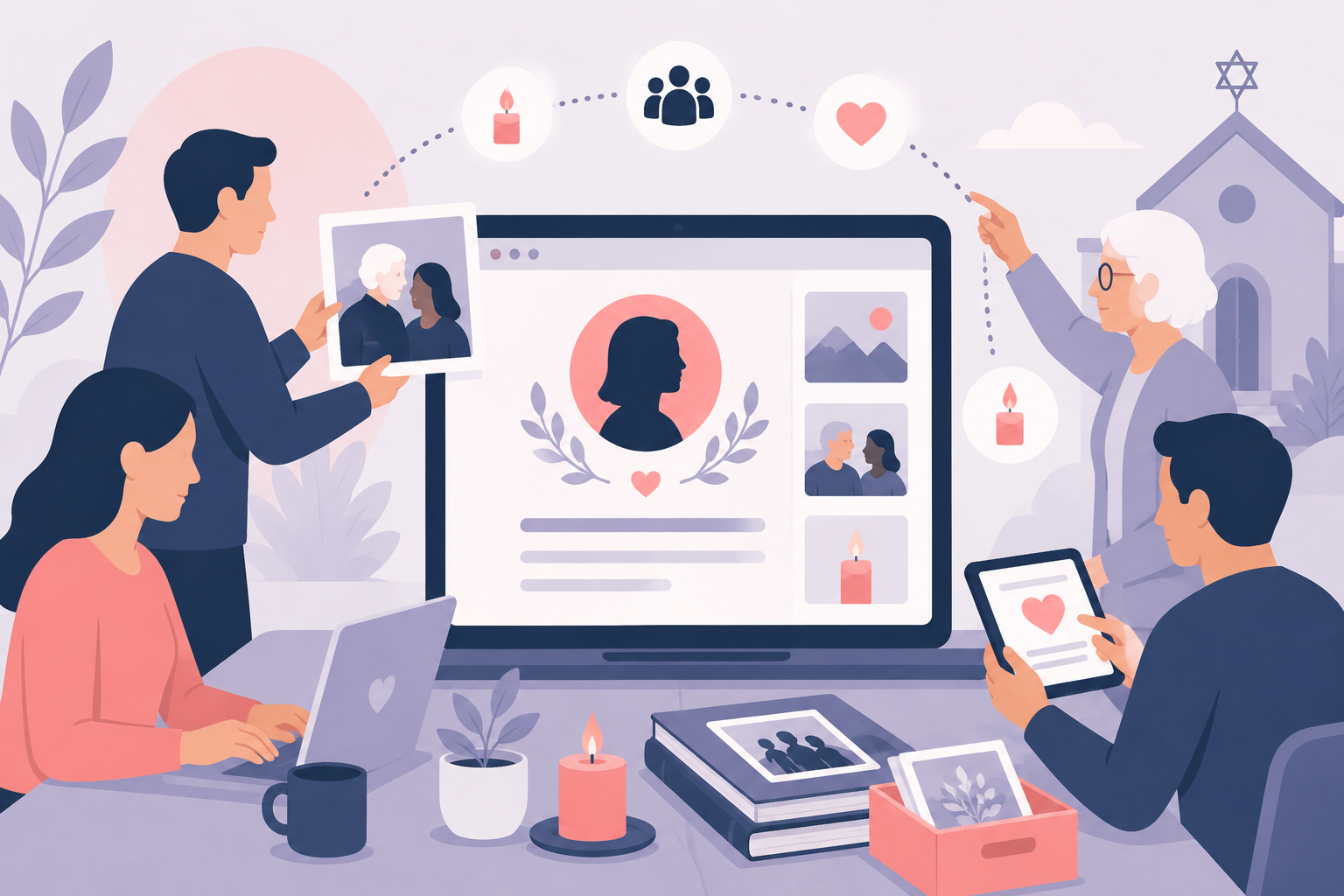
If the person has died, a memorial website can provide a lasting place where family and friends can gather memories, photographs, videos, personal reflections, and other meaningful digital materials.
The physical recognition remains important. The digital story simply allows it to become richer.
From a Physical Plaque to a Living Story
A plaque is fixed in one place. A digital memorial or life story can travel wherever the people connected to that person happen to be.
Family members living in another city can visit it. Friends in another country can contribute a photograph. Former colleagues can share a story. Children and grandchildren can discover memories they may never have heard before.
This changes donor recognition from something people simply look at into something they can participate in.
The difference matters.
When people make donations in honor or memory of someone they love, the gift is often connected to something deeply personal. They may be remembering a parent who received care from an organization, honoring a partner who believed strongly in a particular cause, celebrating a mentor, or keeping alive the values of a family member.
Providing space for that story recognizes not just the donation, but the human meaning behind it.
Giving Families and Communities a Place to Contribute
Memory rarely belongs to only one person.
A daughter remembers one side of her father. A childhood friend remembers another. A colleague may have photographs nobody else has seen. A grandchild may want to share something learned years later.
A shared memorial or life story website gives all of these people a place to contribute.
They can add personal memories, photographs, videos, meaningful documents, and reflections. Over time, the story can become more complete because it is created together.
This can be especially valuable when a donation is made in memory of someone who had a large community around them.
Instead of the family carrying the entire responsibility of preserving that person’s story, friends, relatives, and others who cared about them can participate.
For the nonprofit, this also creates a thoughtful connection with the wider community surrounding a donor or honoree. The organization becomes part of helping preserve a meaningful legacy rather than simply displaying a donor’s name.
Making Recognition Accessible From Anywhere
Physical donor recognition will always have value, particularly when it becomes part of the identity and history of a place.
But today’s families are often spread across different cities and countries.
A plaque inside a hospital, school, museum, synagogue, church, community center, or nonprofit office may be seen by thousands of visitors, but it may rarely be seen by the people who knew the person being honored best.
A digital story removes that limitation.
A simple link can be shared privately with family members or more broadly with a community, depending on the family’s wishes. People can return to the page on birthdays, anniversaries, remembrance days, or simply when they want to feel connected to someone important.
The recognition no longer exists only inside a building.
It becomes accessible wherever the person’s community may be.
Connecting the Physical and Digital Worlds
Nonprofits do not have to choose between traditional donor recognition and digital storytelling.
The two can work together beautifully.
A plaque or donor wall can remain in place while also including a discreet QR code or web link leading to the person’s life story or memorial website.
A visitor who wants to learn more can scan the code and discover the individual behind the name.
Instead of reading only:
“In memory of Sarah Levy”
they might discover photographs of Sarah with her family, stories about her generosity, memories from friends, the causes she cared about, and perhaps the reason her family chose to support that particular organization.
The plaque becomes a doorway into a much larger story.
For nonprofits planning new donor recognition programs, this combination of physical and digital remembrance can create a more personal experience without replacing traditions that donors already value.
A Thoughtful Addition to Donor Stewardship
Good donor stewardship is built on relationships.
People want to know that their support is appreciated, but meaningful recognition goes beyond simply thanking someone for the amount they contributed.
When a donation is connected to a loved one, recognizing the story behind that gift can show a deeper level of care.
A nonprofit might offer a life story or memorial website as part of its recognition program for certain gifts, memorial donations, legacy gifts, or dedication opportunities.
The organization does not need to create the story itself.
Instead, it can provide the family or donor with the opportunity and tools to build the page in their own way. The people closest to the honoree remain in control of the memories, photographs, and stories they choose to share.
This approach keeps recognition personal while respecting each family’s preferences.
Preserving Stories for Future Generations
There is another important reason to think beyond physical donor recognition: stories can disappear surprisingly quickly.
Photographs become scattered across phones and computers. Family stories are remembered by one generation but never written down for the next. Videos remain on old devices. Important details about someone’s life may gradually become harder to recall.
Creating a shared digital space gives families a reason to collect those memories while people are still able to contribute them.
Years later, a grandchild or great-grandchild may be able to discover not only that someone in their family supported an important cause, but also who that person was and what they believed in.
That transforms donor recognition into something much larger than acknowledgment.
It becomes part of preserving family and community history.
Recognition That Reflects the Meaning Behind the Gift
Plaques, donor walls, and named spaces still have an important place in nonprofit organizations. They provide visible recognition and become part of an institution’s history.
But they do not have to carry the entire story.
Behind almost every memorial or dedication gift is a person. Behind that person are relationships, experiences, photographs, memories, values, and moments worth preserving.
A life story or memorial website gives those memories room to live.
With Memoriz+, nonprofits and families can create shared spaces where people can preserve stories, photographs, memories, and other digital materials together. A life story can celebrate someone who is living, while a memorial website can help keep the memory of someone who has died accessible to the people who continue to care about them.
The plaque can remain on the wall.
The story can reach much further.